This post was created in collaboration with Paul-Tech
I like technology – actually, I downright love it. From my first experiments in Paint back in 1994, I’ve made my way into today’s digital agriculture. More and more we hear that decisions must be made based on data – yes, we have field weather stations, yield maps, satellite biomass maps, nitrogen sensors, BUT none of these awesome technologies can see into the soil. Of course, we also have soil samples, which can be used to measure nitrogen too, but between sampling, analysis and results there’s a long, long, long delay – while decisions often need to be made within a few days or even a few hours.
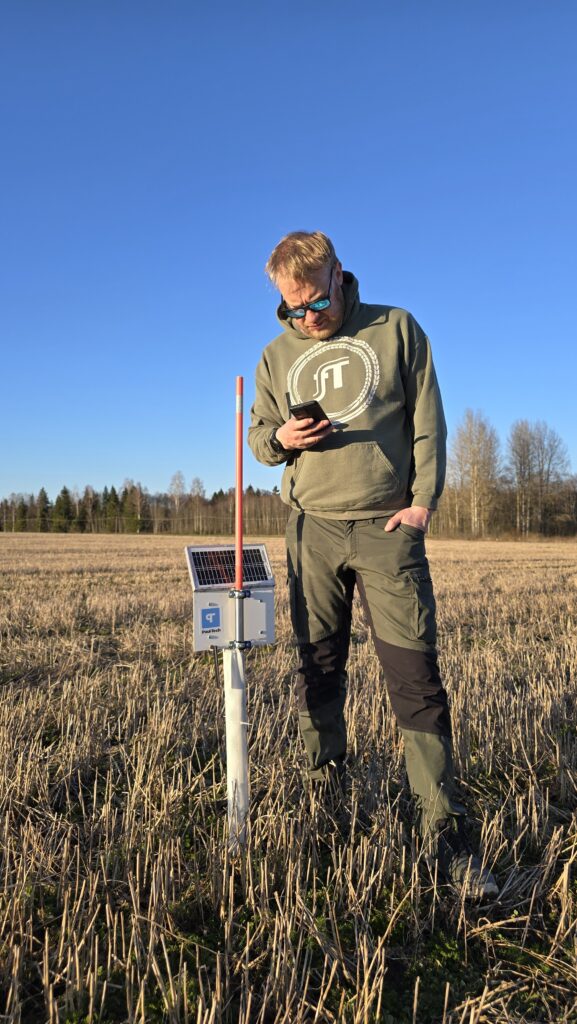
Well then – it just so happened that the Estonian company Paul-Tech offered to ease my data hunger with soil sensors that show:
- Air temperature and humidity
- Soil temperature
- Soil water level
- Nutrient level
And out of these four, I was most interested in soil water and nutrient levels. Paul-Tech’s soil station measures soil salinity (because fertiliser is essentially salt), and with the help of complex, unique algorithms they can derive the nitrogen level in the soil and how much of it is available to plants.
Is it a truly practical tool, or just a cool gadget? We’ll have to try it out!
In order of importance, I wanted to get the following benefits from the soil station:
- Saving money – smarter fertilisation decisions could mean lower costs.
- A fair yield – what I put in is what I get out. No over-fertilising, no under-fertilising.
- Understanding soil processes – let’s be honest, we don’t really know exactly what’s happening in the soil, or how different fields/soils behave. Hopefully the soil sensor will bring more clarity into that grey fog.
- Differences between fields – does a field yield less because there’s a general nutrient deficiency, or is it a water regime problem?
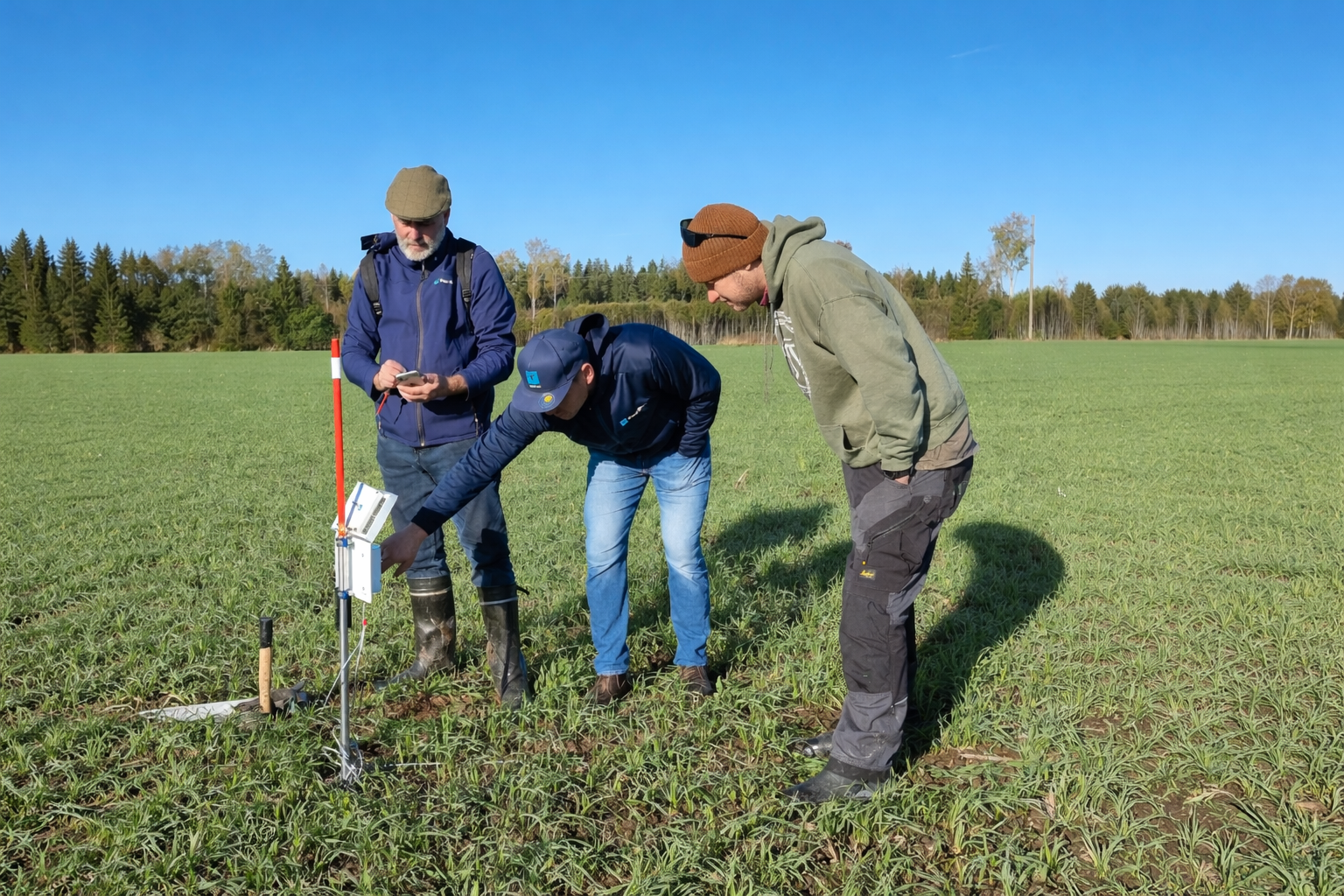
In September 2024, three soil stations were installed in my fields. Together with the Paul-Tech team, we chose slightly more “special” fields where differences between the soil stations could stand out.
Three fields, in three different regions, and with three different soil types.
- Oonurme – my home field with a solid, average soil. Not overly fertile, but it doesn’t leave me without yield either. Medium sandy loam.
- Murumäe – a very drought-sensitive field where yields swing from one extreme to the other depending on how much water comes from the sky. Lighter sandy loam.
- Veski – the least drought-sensitive field, always above-average yields regardless of rainfall. In fact, even in drought conditions it has consistently produced a proper yield. Heavier sandy loam.
What decisions did the soil water reading help to make, and what about nutrient leaching? More on that in the next posts!