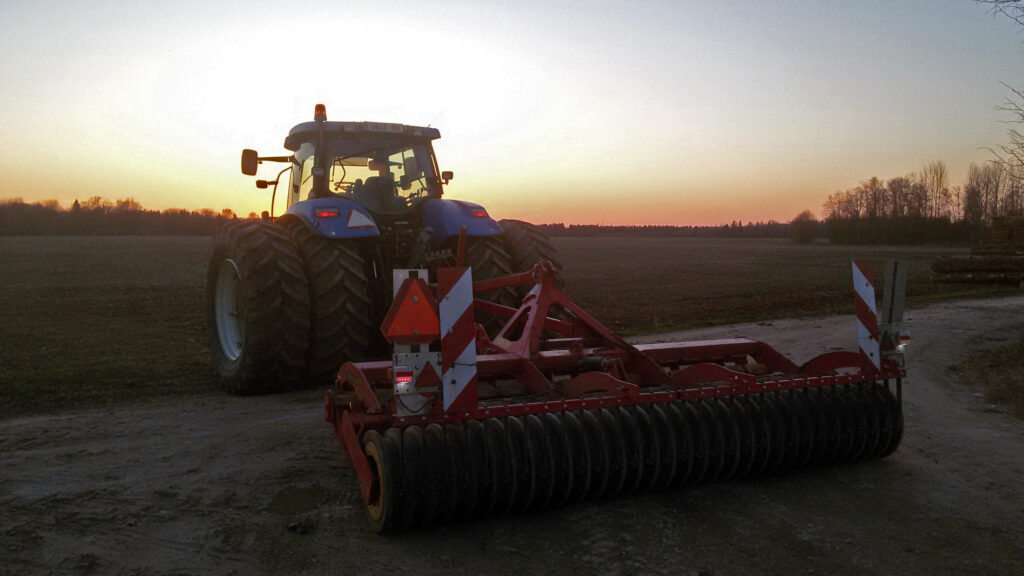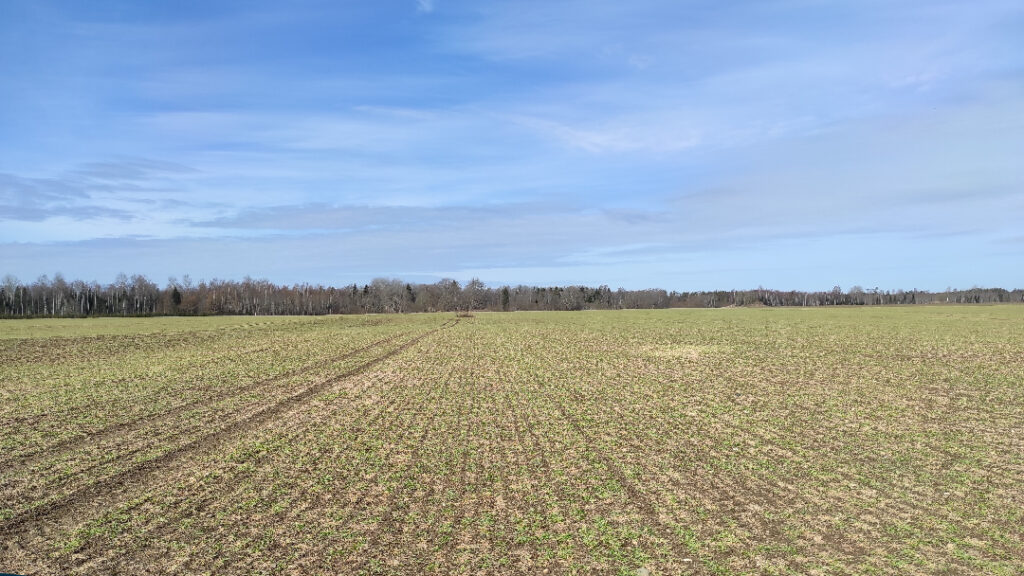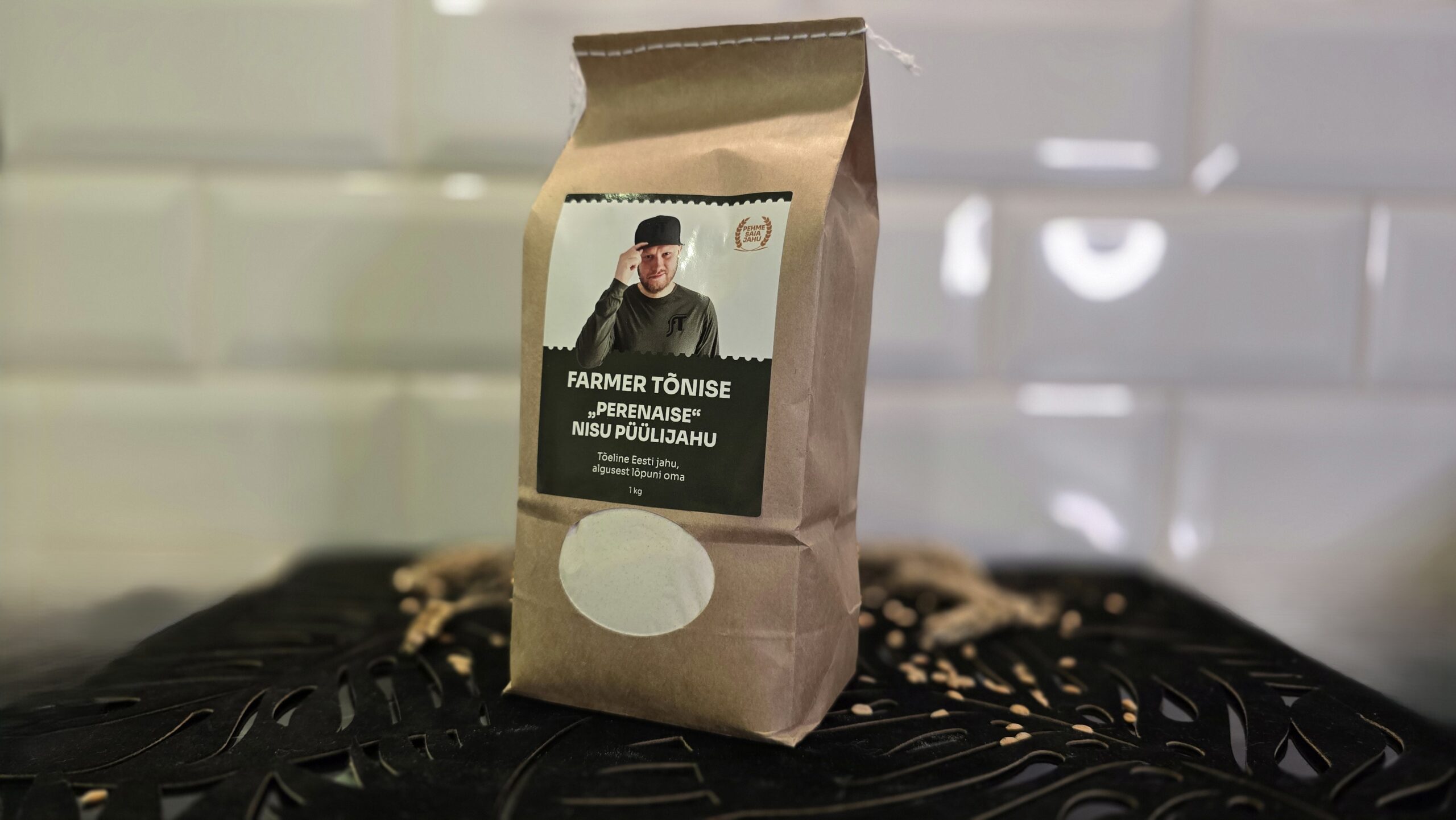
Perenaise wheat white flour is a high-quality flour grown and milled in Estonia, made from the Estonian-bred winter wheat variety “Perenaise”. In addition to wanting to grow a local variety, I also wanted to show through this process that flour does not simply come from a store. From sowing the grain to producing finished flour, the process took more than a year, and if someone wants to know exactly where flour comes from and what was done and why, this journey can be read in more detail in my blog post.
What are the prerequisites and characteristics of high-quality wheat flour?
In this post, I take a closer look at the finished flour. The first prerequisite for good flour is a suitable variety with the potential for high protein content, good gluten (wet gluten) quality, and a high falling number.
Cereal varieties bred at METK have, as a result of long-term breeding, become very well adapted to growing under Estonian conditions.
The characteristics of the “Perenaise” variety include, for example, very good baking quality, a very good falling number and test weight, as well as excellent winter hardiness and disease resistance. METK researcher and breeder of “Perenaise”, Reine Koppel, talks in the article METK researcher: an Estonian winter wheat variety makes an excellent loaf | Estonian Crop Research Institute about the breeding of the “Perenaise” variety and why it produces flour that is particularly well suited for baking.
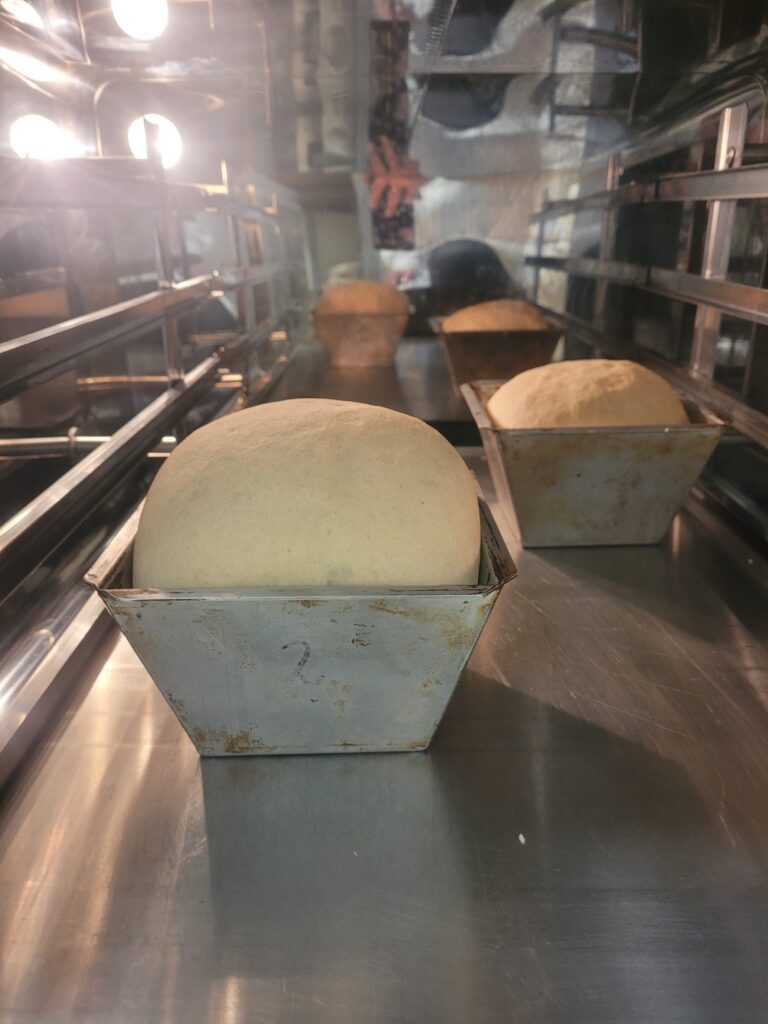
The baking quality of grain grown in the field is primarily determined by protein content and the properties of gluten. High-quality gluten has the right level of strength, provides good dough stability, and allows starch to function optimally during baking.
My milling partner is Koksvere Mill. A distinctive feature of a small mill is that a higher ash content is retained in the flour, which gives the flour a slightly darker color but also means a higher content of beneficial minerals such as magnesium, iron, and zinc.
In addition, we do not mill large quantities at once, in order to deliver the freshest possible flour to you. The shelf life of the flour is generally 8–10 months.
What is white flour?
White flour is a subtype of flour – a light and finely milled wheat flour. All white flours are flours, but not all flours are white flours. Flours differ from one another in ash content, color, and nutritional value, ranging from white flour to whole wheat flour.
On wheat flours sold in stores, one often sees type numbers, such as 405 or 550. These numbers do not indicate flour quality or fineness of milling, but rather refer to the ash content, meaning the amount of minerals in the flour — respectively 405 or 550 milligrams per 100 grams of dry matter. The smaller the type number, the lighter the flour and the fewer minerals it contains from the grain’s outer layers. In other words, there is no need to be wary of the term white flour — it is flour like any other. Just better, because you know where it comes from and how it was made. In addition, flour from Koksvere is healthier, but without the distinctive aftertaste of whole wheat flour!
Once the first batch of flour was ready, it was tested by LABRIS (the State Laboratory Research and Risk Assessment Center).
| Nutritional value | Amount per 100 g |
| Energy | 1528 kJ / 365 kcal |
| Fat | 1.84 g |
| Saturated fatty acids | 0.23 g |
| Carbohydrates | 72.1 g |
| Sugars | 3.5 g |
| Protein | 13.78 g |
| Salt | 0 g |
And since this is wheat flour, it naturally contains gluten.
Typically, flour sold in stores has a protein content of 10–12 g per 100 g. In contrast, my “Perenaise” white flour has a protein content of nearly 14 g per 100 g. Protein content determines how strong a gluten network the flour can form and, consequently, how elastic, stable, and airy the baked result will be.
“Perenaise” flour in the baking laboratory
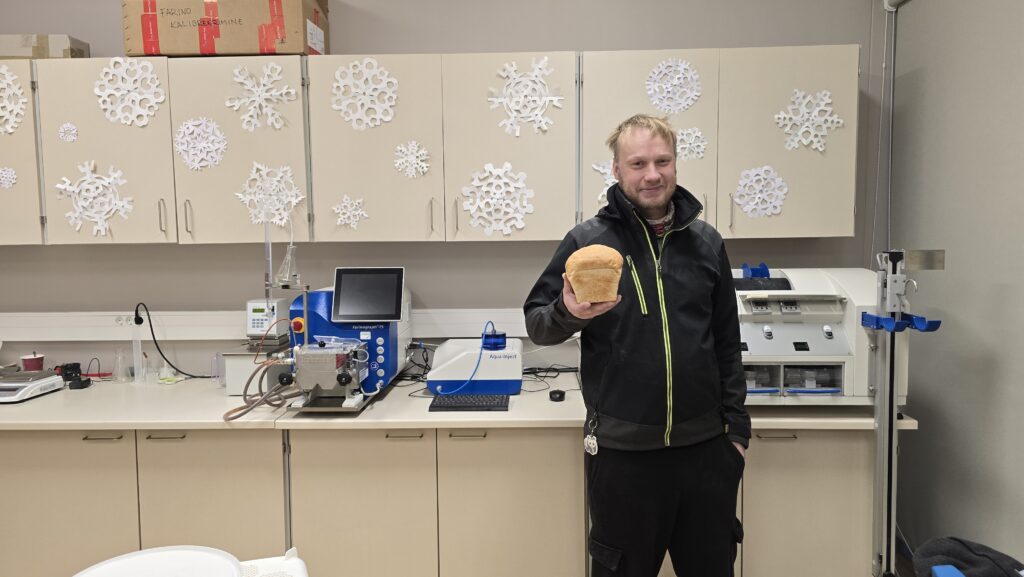
Researchers at METK tested the baking properties of “Perenaise” flour in their baking laboratory and analyzed the flour’s indicators. Based on its ash content, my flour falls somewhere between light wheat flour and semi-whole wheat flour.
| Indicator | Level | What it means |
| Protein | 14.8% | Very strong flour with high potential for gluten formation |
| Wet gluten | 38.1% | Provides elastic dough, good volume, and strong structure |
| Falling number | 341 s | Stable starch |
| Ash content | 0.71% | Moderately mineral-rich wheat flour that gives baked goods more flavor and a slightly darker color |
Feedback from a practitioner
Beyond relying solely on science, I have also received positive feedback from practitioners. In addition to family and friends who have actively tested my flour, Eva Pärtel also shared her assessment.
Eva Pärtel is a cookbook author and the driving force behind Perenaise Pagariäri, operating in Tallinn. In a Facebook post, she described the flour’s qualities as follows: “The greatest value for me is that it delivers an incredibly rich flavor.”
I hope this brief introduction to the world of flour helped clarify what qualities good flour should have, and how much valuable work is done by farmers, breeders, mills, laboratories, and of course bakers, to turn grain grown in the field into delicious bread.